
Start with Your Room Size and Layout
Before you fall for a style, look at the space it needs. A sectional usually works best in larger rooms where it can sit comfortably without crowding walkways or overpowering the layout. A sofa is often easier to place in compact or multi-use rooms because it leaves more breathing space around it.
Go beyond floor measurements too. Check doorways, hallway turns, stair access, and entry points before making a decision. A sectional may arrive in separate pieces, which can help during delivery, but it still needs the right room proportions to feel balanced once it is in place.

Think About How You Actually Use the Room
Your living room should support your daily routine, not just look good in photos. If the space is where everyone gathers to watch movies, relax, or stretch out at the end of the day, a sectional usually makes more sense. It naturally creates a casual setup and gives more people a comfortable place to sit.
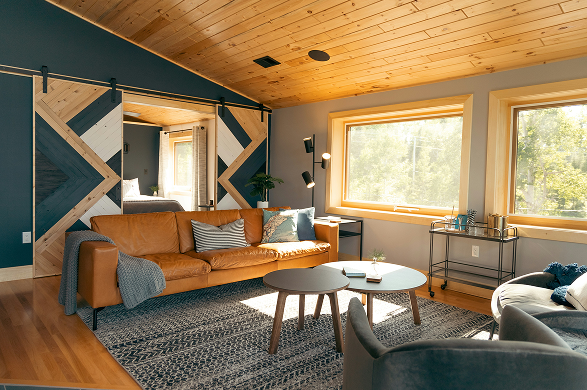
If you prefer a more flexible arrangement, a sofa can be the smarter choice. It pairs well with accent chairs, stools, or ottomans and gives you more control over how the room feels. That works especially well in homes where the living room also needs to handle reading, hosting, or working from home.
Protect the Flow of the Space
Good furniture should never interrupt movement. One of the biggest mistakes people make is choosing seating that looks right on its own but makes the room harder to move through. A sectional can define the room beautifully, but in a tighter layout it can block natural pathways and make the space feel closed in.
A sofa is usually easier to place against a wall, float in the center, or combine with other pieces without affecting the flow. If your living room connects to a dining area, kitchen, or hallway, this matters even more. The room should feel easy to move through from every angle.
A sectional feels relaxed and room-filling. A sofa feels lighter, cleaner, and easier to build around.
Consider Flexibility Over Time
Furniture is a long-term purchase, but your needs can still change. A sofa gives you more freedom to rearrange, restyle, or move into a different home later. It adapts more easily to new layouts and makes room updates less limiting.
A sectional is more layout-dependent. It works best when you already know how you want the room to function and you are happy to commit to that setup for the long run. If you like changing things around or move often, a sofa gives you fewer limitations later.
Making the final call
Choose a sectional if you have the room for it, want a more relaxed setup, and need generous seating in one piece. Choose a sofa if you want more flexibility, have a smaller space, or prefer a layout that feels lighter and easier to shape over time.
There is no universal winner here. The best option is the one that fits your home, supports your routine, and helps your living room feel comfortable every single day.
If you want this article to feel even more real, I’d also recommend changing the current intro line under the title. Right now it talks about small-space tricks like mirrors and lighting, which does not match the actual sofa-versus-sectional topic in the article. That mismatch is visible in the uploaded page and weakens the page instantly.